WHAT IS HARDER TO SEE Patrick Belmont
Updated: Sep 17

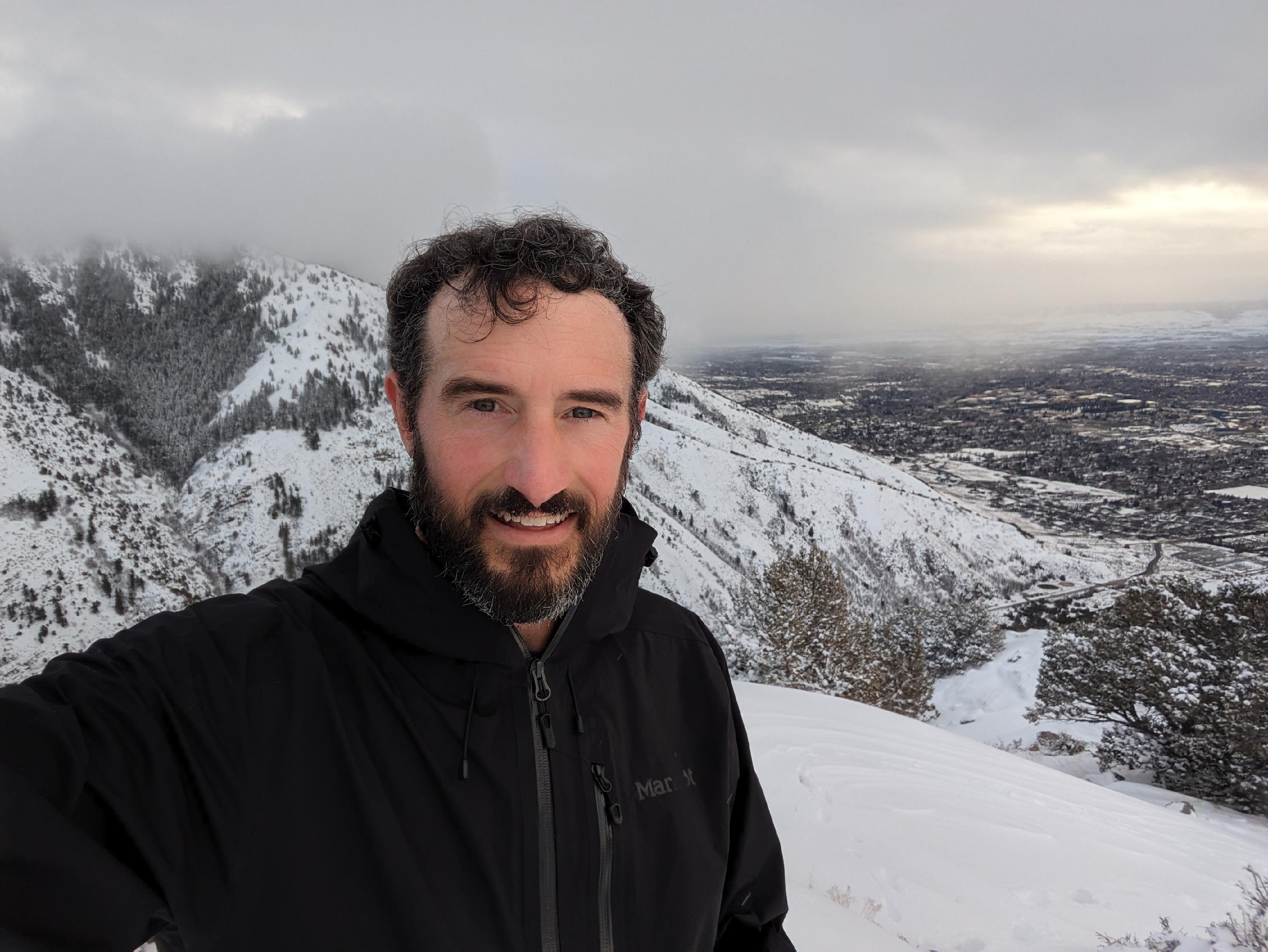
One of my favorite views is looking across Cache Valley. On a clear day, you can stand on the western slope of the Bear River Range and see the Wellsvilles in all their glory--and everything in between.
Other days, the mountains are gone. Not actually gone, of course. They’re still there, doing what mountains do. We simply can’t see them. Those are the days we can see, taste, and smell the waste we’re generating. Our valley traps it here, on occasion, as a reminder for us. And there’s much more pollution we cannot see. It doesn’t scratch your throat or turn the mountains gray, but it accumulates nevertheless. And the costs keep adding up.
Many of our politicians like to pretend that anything we can’t see doesn’t exist, but our lungs know better, our snowpack feels the offense, and our climate keeps an honest ledger.
We are good at believing what we can see: a new road, a new subdivision, a new building, another water pipeline.
We can point to them. They all contribute to another quarter of rising GDP. In some way, it feels like progress. And in some ways, it undeniably is. In other ways, it’s similarly undeniable that what we’re building--and how we’re building it has costs we have chosen not to count equally.

Our shared air asks harder questions of us. What about the costs we cannot see as easily? Like the connection between our air pollution and the asthma attack, respiratory illness, or lung cancer that didn’t need to happen; like the ton of carbon dioxide added to a sky already holding too much; like the child living here fifty years from now, with fewer choices than we have today; like the degraded trust among neighbors, the growing cynicism and despair.
It’s not anyone's fault. No one driving to work today designed a valley that requires a car. None of us has a real voice in the energy that heats our homes or powers our lights. We inherited those things, but now we’re stewarding the world others will inherit.
We still have choices in how we will do it. The habits of the past have tremendous momentum, but I’m seeing people from all walks of life waking up to the need for change: waking up to the responsibilities we have to those who come next; waking up to the realization that our ability to make good on those responsibilities depends not only on our cleverness and technological innovations, but on our courage, wisdom, and restraint.

The science has been clear as Cache Valley on a good day, for decades. The science is not where we’ve been failing, but rather when the science asks hard things of us, we have not answered the call. Our air pollution problems have technical aspects to them. But consider for a moment the possibility that the reason our air keeps getting worse is not due to technical problems. Rather, the problems in our air, the ones that are easy to see, as well as the ones that are harder to see are fundamentally relational problems.
There are symptoms of broken relationships in our community: broken relationships with the land; broken relationships with generations yet to be born, and broken relationships we carry around inside ourselves as we search for life worth living.
The first step toward relational repair is to begin seeing the relationships more clearly.

The cards may feel stacked against us. That’s because they are. Those who want to privatize the profits and hand the bill to the rest of us will keep pushing relentlessly. Maybe we only muster the courage, the resolve, the capability to shift us all onto a better trajectory by choosing to look harder for what we have not previously been able to see.
Maybe it requires remembering that every breath is a relationship: between our bodies and this valley; between neighbor and neighbor; between us and people we will never meet.
Maybe we need a more clear, shared vision for where we want to be: Living in a valley where walking somewhere doesn’t feel out of reach; where a twelve-year-old can bike across town; where taking the bus or trolly is simply how you get there; where home and work and groceries and friends are close enough that we keep bumping into one another; where cleaner air is not the price of giving something up, but rather, one of the things we gain by living closer, slower, more connected lives. Maybe the hardest pollution to see is the distance we have created between us and others. What would it take for us to learn to see all the way across the Cache Valley of the future--and to breathe the best version of it into being?

Patrick Belmont is a water and climate scientist, professor at Utah State University, co-founder of Our Community Cache Valley, and a dad. His work explores how we can better understand and respond to challenges involving water, wildfire, climate, and the long-term resilience of our communities. Much of his community work focuses on bringing people together across differences to listen, learn, and find better ways forward. Patrick is an Independent candidate for the Utah Legislature, representing House District 3.


Comments