Editor's Corner
Updated: Jun 17
It is a little known truth that if one spends enough time on the land one may come to understand things that can never be known from books, computer models, podcasts or professors. If attention is paid, the land begins to speak its own truths in its own language. It speaks these truths in both whispers and shouts. To make a living from the land requires paying attention. Those who don't, soon go broke. Those who don't pay attention eventually break the land from which they seek harvest. Those who are sensitive to the land they tend still often go broke. Tending one's livelihood from the land itself is a tough business. Mistakes are often unforgiving.
Farmers, ranchers, loggers, trappers, and hunters who live on the land, live in places not dominated by urban pavement and urban concerns, or who visit such environments daily, know things that urban folks just cannot easily comprehend. A great divide has grown between urban and rural America. The divide is both socio-economic and cultural. It has become political. Not long ago most of us at least had grandparents who owned a farm. Nowadays less than 2% of the U.S. citizenry are full time farmers and ranchers. The disjunct between those who produce and those who consume food has never been wider.
It is past time for the environmental community to recognize its educational and economic privilege and to look for ecological truth wherever it may be found. A caring, skillful love for the land can take many forms. It is past time to recognize that folks who make a living from the land often comprehend different ecological paradigms. Different but equally valid to that of a college educated natural resource graduate. Both views occupy two ends of a very small ship surrounded by multi-national industrial exploiters, polyester clad real estate developers and politicians eager to serve wealth and power. We are surrounded by powerful interests that could care less about the land, water, air or the Humans and wildlife whose well being depends upon a healthy world. A well rounded education requires that we learn from many sources. United we stand.

The root word for conservation is conservative. It puzzles me how this term has taken on a political meaning that has little to do with conserving anything. Politically "conservative" or politically "liberal" can have nothing or everything to do with how one considers the land. A conservationist
approach to life embraces caution, takes only what is needed, moves slowly, watches carefully, cultivates reserve and practices a generous frugality. A conservationist view knows how much is enough and when to quit. A conservationist view knows how to do more with less and that true affluence is simply having what you need. A conservationist view knows that if you wish to take something you must first give something in return.
Conserving clean air and water, healthy soils and open space allows for many things that make life good. One of these is the ability to sustainably and locally grow the food we need. I am cautious enough to consider that someday this possibility may well be the difference between self-sufficiency and slavery. While data centers, industrial hubs, power plants, subdivisions, big box stores and hillsides sprouting trophy homes may make for a quick buck for a select few they will never fill our bellies nor strengthen our bones. They will never fill our hearts with beauty or lift our spirits. Land dedicated to such development is dead.
Living open spaces of well tended, fertile farmland offers us a future. Currently Cache Valley has about enough farmland left to feed its existing population. Let's keep it. It is more real than any money in the bank.
It was the intention of this Summer Solstice edition of Cache Valley Winds to give voice to many different land-based harvest occupations. The topic soon proved too vast. Instead we've focused on some of the challenges of farming and herding of which a reader might be unaware. Why don't local farmers grow something other than water gobbling alfalfa and cows anyway? If you enjoy this publication please forward it to others who might find it informative and useful.
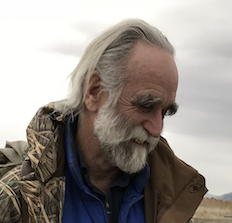
My Best... Kayo Robertson


We are give life that we may enhance life