FARMING IN CACHE VALLEY

Tom Timken Interview

Q: Why don't the farmers in Cache Valley grow something other than high-water-use alfalfa and cows?
"Well, at one time they did. When the valley was first settled they grew everything possible for their own use. But as agriculture developed and farms became bigger you had to have a larger market. For example, up until the early seventies there was a big market for sugar beets and when they discovered high fructose corn syrup, that was the end of that. What else would grow in this area? You could grow alfalfa for dairy cows and beef cows along with some corn to complement the cow industry. Environmental and soil conditions don't allow for a large onion crop like over in Tremonton where there is a little bit better soil and a little bit warmer climate. The same is true of other crops. You can be successful with smaller crops. You can grow a small asparagus farm or a small raspberry farm but anytime you want to go big you have to have a market or develop a market for it. So a lot of it is just marketability and what grows in this climate and this soil and how do you sell it in large enough quantities to make a living? There are people who have inherited money who can grow grapes, or whatever they want to do, but they are starting off with a surplus of money . You just can't do economically crazy stuff for very long . When I see people trying to do (alternative) crops in the valley with twenty-acre farms, that's the last time they try it. They're done. Whether it is peas or whatever they decide to do. You must have a market for it. We used to have a big market for sweet corn. Del Monte would contract with people to raise sweet corn by hundreds and hundreds of acres. It would be canned. When Del Monte quit, that was the end of that market. You can grow corn here but alfalfa grows the best. What do you use alfalfa for? You feed cows. Alfalfa goes hand in hand with cows. It is one of the best crops for a cold climate and that's what farming developed into. If you ship feed in, like chickens, you can have a big chicken farm anywhere. Which we have here. To grow a crop you must have marketability. You also need the right kind of weather. You need the right kind of soil. When you have different conditions, like out by Boise, they raise billions of pounds of onions. They may have a bad year but the conditions are right for growing onions. They have the markets and the processing plants for it. They have a smaller onion industry over by Tremonton, The soil and the climate are better, but it is not as huge as over near Boise."
Q: They used to grow peas here. In Smithfield the logo "Those Good Peas" is still on the old Del
Monte building. Why did these local processing plants close down?
"Because of frozen food. Frozen food is a bit tastier and so the whole market has diminished. There is still a canned food market, but it is less for the population. At one time they canned everything. We have a lot of fresh stuff now. Miles and miles of aisles of fresh stuff. The second best is frozen. We have freezers full of frozen vegetables. The canned section is smaller than these other sections of vegetables."
Q: Does most of the fresh produce now come from California?
"Well name the fresh stuff and I'll tell you where it comes from. This time of year we might get watermelons from Mexico or Honduras. They might come from Arizona as you get later into the season. There are blueberries from Peru or Chile, then (as the season progresses) it might switch to Mexico or California for blueberries. As the crop moves north it ends up in Canada, the last blueberries to be harvested. It is just where it is harvested and shipped. There is a huge market for fresh produce now. It's a large section of the grocery store."
Q: Couldn't we grow much of these fresh produce foods locally?
"No. You would have to have a plant that would contract fields out. They would not be located here. They would go to a place with better climate and soil conditions. They do that in California. They still do that for vegetables in parts of Oregon in the Willamette Valley. You will need a commitment from some fresh food processors and freezer industry to have a market here and, as far as I know, that is not going to happen in the near future."
Q: Why wasn't the cannery replaced with a frozen foods plant?
"That was a business decision. They can do the frozen plant somewhere else for lower cost and productivity. Everything comes down to a few pennies. We worry about grocery store prices, well, when it gets down to expenses if they make three or four percent profit at the end of the year they are doing good. Look at what it costs to transport, display, sort and throw away spoilage, hire people, rent and pay for a building. Agriculture runs on pennies. It is not a get- rich business, whether it is a grocery store or some farmer growing alfalfa for a cow. The profit makes it a very close business. You have to make it on a very fine line. Is there an opportunity for expanded business? Yes, but it is a matter of scale. You might find a market for asparagus here. Sure. Or strawberries. There was a guy up by Trenton who grew a lot of strawberries. He is no longer in business. Maybe it was too much work. Too hard to pick them. Too hard to sell them. I don't know what the case is. You don't see a lot of people doing that now. Once when land and labor were cheaper, the family would help out, there were strawberries being sold several places in the valley. Who wants to do that now when you can buy them on sale for a buck fifty at the grocery store? They taste terrible but they are still a buck fifty. We buy cheap peas at Winco. A whole pound of them for a buck fifty. I couldn't grow them and shuck them myself if I gave myself $2.00 an hour. Current agriculture is incredibly efficient. Food tastes a little better if you grow it yourself but it is a lot of work and time. Everyone complains about the price of food but I think that our food is very, very cheap. Potatoes, rice, peas, oranges: I buy 32 quality oranges for 69 cents a pound. They ship in tropical bananas and we buy them for 49 cents a pound. I don't know how grocery stores sell food so cheaply. Meat, such as beef prices, are now sky high but most of our food is pretty darn cheap. Chicken you can buy for two something a pound. It is tough to compete with grocery stores unless you have high quality produce, own a little bit of land and sell it directly to the public. If you go larger, say one hundred acres, what are you going to do with a hundred acres of a crop that ripens at one time? A processing plant will tell you what to plant and when you will harvest it. You don't get total autonomy. If you are in the sweet corn business growing it so that a plant can freeze it, they tell you when you are going to plant and when they want you to harvest it. It comes down to pennies per dollar that are going to be made. So you have to be careful. A lot of money is lost by people who think they know something about agriculture. But they don't. It's a tough business."
Q: What about specialty markets such as organic produce?
"It's good if you can develop it. There's people who do that. You can make a few bucks at it. You can't support a big family doing it. If you hit the lottery with 5,000 acres of wheat or 5,000 acres of potatoes in Idaho, which is fairly common for farms to be that big, you can support a family on it. To do something small scale, organically, yes you can make a few bucks at it. You can sell at farmer's markets. Most of the folks at these markets are not making a living doing it. Most of the farmers in this valley with larger, more commercially viable farms, also have supplemental incomes. There are not a lot of organic farmers making a lot of money. I think that in this area it is extremely tough because a lot of people grow stuff in their backyard. You go to some places, even in the Intermountain West, there are no gardens. Folks just don't bother with it. It is not time or dollar efficient."
Q: What about soils in Cache Valley as opposed to those west of us or along
the Wasatch Front?
"Well those soils are flatter, sandier, and more easily watered. There are some soils (west of us) that are alkaline but in general it is better soil for farming. You have a better chance at being a farmer over by Tremonton. South of Tremonton farmers are more efficient; they make more money and are better farmers. Here the farms are smaller and some are not very efficient so it's just a better deal. They have better soil, better climate and everything. There are people who are making a pretty good living yet here in Cache Valley you have people who are making good money raising cows right now (not the dairy business) because of high beef prices. There are a couple of sheep farmers who are doing fairly well but other than that (local) farming is not a very good business. Organic farmers, small raspberry farms are probably making a profit but many are losing money in agriculture because of all the costs of equipment, labor and fuel."
Q: How much of a learning curve is there for a farmer to change crops?
"The equipment is often different. You might need to spend a hundred thousand on new equipment."
Q: Beyond what you've spoken of what should we, the consuming public, know about agriculture?
"Well just that it is a very tough business. That the price of land itself makes farming impossible to break into. Another way is to lease land. Sometimes you can lease land fairly cheaply. That younger people, in general, do not want to take on such long hours and risk for such low pay and that your paycheck comes but once a year, if at all. As far as what people should know is that this is a dairy and beef cow area. That is what can be grown here profitably. While there are specialty crops grown here, it is tiny-- less than 1/10th of one percent. Even dairy farmers are having a tough time because their expenses are greater than their profits."
Anything else that you'd like to say on this topic?
"Well, if you don't like grocery store prices, grow some lettuce in your house instead of house plants. grow some radishes on our windowsill. Try your hand at growing things. It is not cheaper to do so but it can be a lot of fun and quite often it tastes better."
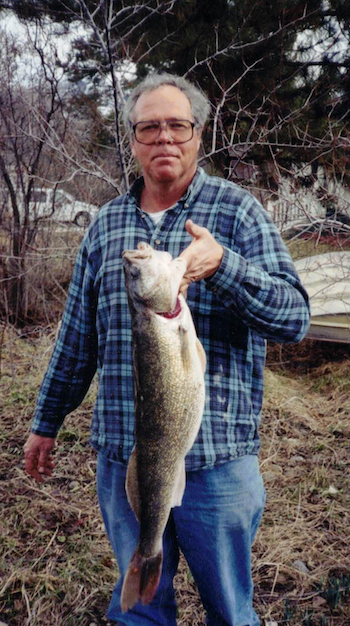
Tom Timken is the closest to a hunter/gatherer than anyone I have ever met. His livelihoods have included greengrocer, salmon fishing, crayfish fishing, carp seining, muskrat, beaver and mink trapping, fur broker, and farming for corn, tomatoes and melons, For thirty years Tom and his wife Sony owned and operated Local Produce on 4th North in Logan. He knows most of the local producers in Cache and Box Elder counties and along the Wasatch Front fruit belt. Tom is a master hunter and angler.


Comments