PREDATION
Updated: Jun 17
by Kayo Robertson

“What but the wolf’s tooth whittled so fine. The fleet limbs of the antelope? What but fear winged the birds, and hunger Jeweled with such eyes the great Goshawk’s head?”
by Robinson Jeffers, 1924
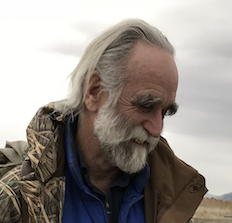
I grew up in a hunting family. At the age of eight I was given a bow and arrows. At twelve I was given a rifle. I was instructed solemnly in the use of dangerous tools, right behavior and the ways of prey species. Like many young hunters, my enthusiasm sometimes exceeded my judgment. I remember the shame of holding in my hands the beautiful but lifeless form of a kit fox that I had no business killing. This too was part of my training. I learned where my food came from and that the price paid for my own life was the death of other living things. I learned to think like the creatures I hunted, to take only what I needed, to use what I took, to pass up a shot that wasn’t sure, to be still for long periods of time, to move quietly, and to endure cold and heat. I pursued a way of life that allowed me to be a participant in nature’s drama rather than a distant observer. I learned of the dignity, wisdom and intelligence of wild creatures and how mistaken we are to judge the rest of animal creation by the subservient behaviors of the animals we’ve domesticated. Hunting became a passion of mine. Along with learning about the lives of the creatures I pursued, I came to love the beauty of the landscapes where they lived. As an older hunter, my passion for the kill has dimmed while the weight and wonder of life giving unto life has grown. While I no longer live in the wilds, I spend more time working to save and rehabilitate those wild areas that are left. I now use the skills I learned following the trails of wild creatures, to pursue knowledge of how to grow things or to track down a better sentence or picture.
The hunter’s passion of the young man remains, though its object has changed. Hunting, as a skill to be passed on to young people or as a pastime for adults, has fallen on hard times. Much of what we now call “hunting” has left far behind any need for knowledge of another living creature and how to respectfully enter its world. Today’s “hunting” deals rather with the technology of off-road vehicles, high powered spotting scopes, and sophisticated weaponry capable of killing an animal a quarter mile distant.
Meanwhile, an increasingly urban population looks longingly at what has been lost, even as it moves ever further from any natural world, has become very vocal in its opposition to the ethics of hunting on any level.
Historically the majority of votes and monies cast in advocacy of marshes, wild prairies, mountains, forests, rivers and wildlife has come from hunters. As we continue to urbanize, fewer parents will familiarize their children with the skills of hunting. The future will inevitably sport a largely non-hunting population, however, it will be a critical time for our nation’s wildlife. Hunting license fees generate hundreds of millions of dollars annually. These monies go directly to fund both habitat preservation and wildlife conservation.
As hunting advocacy groups weaken, who will carry the responsibility of seeing that wildlife survives across a landscape managed by market economy, where the bottom line is often "what is it worth" and “who will pay”? As hunting skills disappear, what skills will bring us intimately into the natural world and temper our vast ignorance of that world?
Hunting is absolutely natural. The master hunters are, of course, those creatures we call the predators. Native American cultures seemed to view these beaked, fanged, and clawed creatures as fellow hunters; as entities of incredible wisdom, power and skill.
Our culture has looked upon predators as competition and threat; a nuisance to be ruthlessly exterminated. This view is changing. Though we may never be able to look at the world through “the great goshawk’s jeweled eye”, we can now see the relationship between the wolf’s tooth and the fleet limb of the antelope. They need each other.
One master hunter that is now taking much blame for plummeting Mule Deer populations is the Cougar, or mountain lion. Another is the Coyote. The State of Utah has recently removed all protections for the Cougar and initiated a $50 to $100 bounty for Coyotes. The science of predator control offers as many questions as answers, but in general suggests that such killing programs do little to help the deer. If you are persistent, Cougar tracks may be found in the winter snow among rock outcroppings in the Bear River Range. Look for them in places that a human would least likely frequent.

Following Cougar tracks, tracing the howls of Wolves as they return to the Yellowstone ecosystem or looking closely at the spirals of Golden Eagles may well be one way that we maintain an understanding of what is real in the world, of what the hunter knows that the rest of us have never had the chance to learn.
Our refusal to limit our numbers, or our pollution, to check our greed or to curtail our worship of “growth” at any price has pushed many prey and non-prey species to the brink of extinction. Bashing hunting distracts us from facing our collective failure to live here in a sustainable and respectful fashion. The sadness of the war over hunting is that, as often as not, it pits those who care about wildlife against one another. The apparent ignorance of the anti-hunter is pitted against the presumed lack of sensitivity of the hunter. The bridge between the two factions is not easily crossed. While the argument continues, vast resources may be lost.


Comments